Dear Comrade
Reflections on Two Years of Community Defense

There isn’t always time for poetry. I certainly haven’t had much time for it in the past year, which is why this is the first missive I’ve sent since last April. But in all things I am a poet. I can’t turn poet brain off. Which is why, even now, even as ICE agents descend on our cities, as I raise money to clothe our neighbors and to send books to kids hiding from state violence in their houses, I find myself thinking about the poet Angel Nafis referencing John Banville on a 2018 episode of Vs. the Podcast: “And he’s asked about being a writer, and he was like, ah, what a preposterous, maddening, wonderful thing to find the right… no. The exact… no. The only word.”
I’ve been thinking about the word “comrade” a lot recently. Though I know that at the end of the day, it doesn’t really matter what we call each other, as long as we’re showing up together to get the work done, I can’t help but deploy poet brain. What is that only word that can describe what we are to one another, those of us who find ourselves out and about with others organizing this kind of resistance?
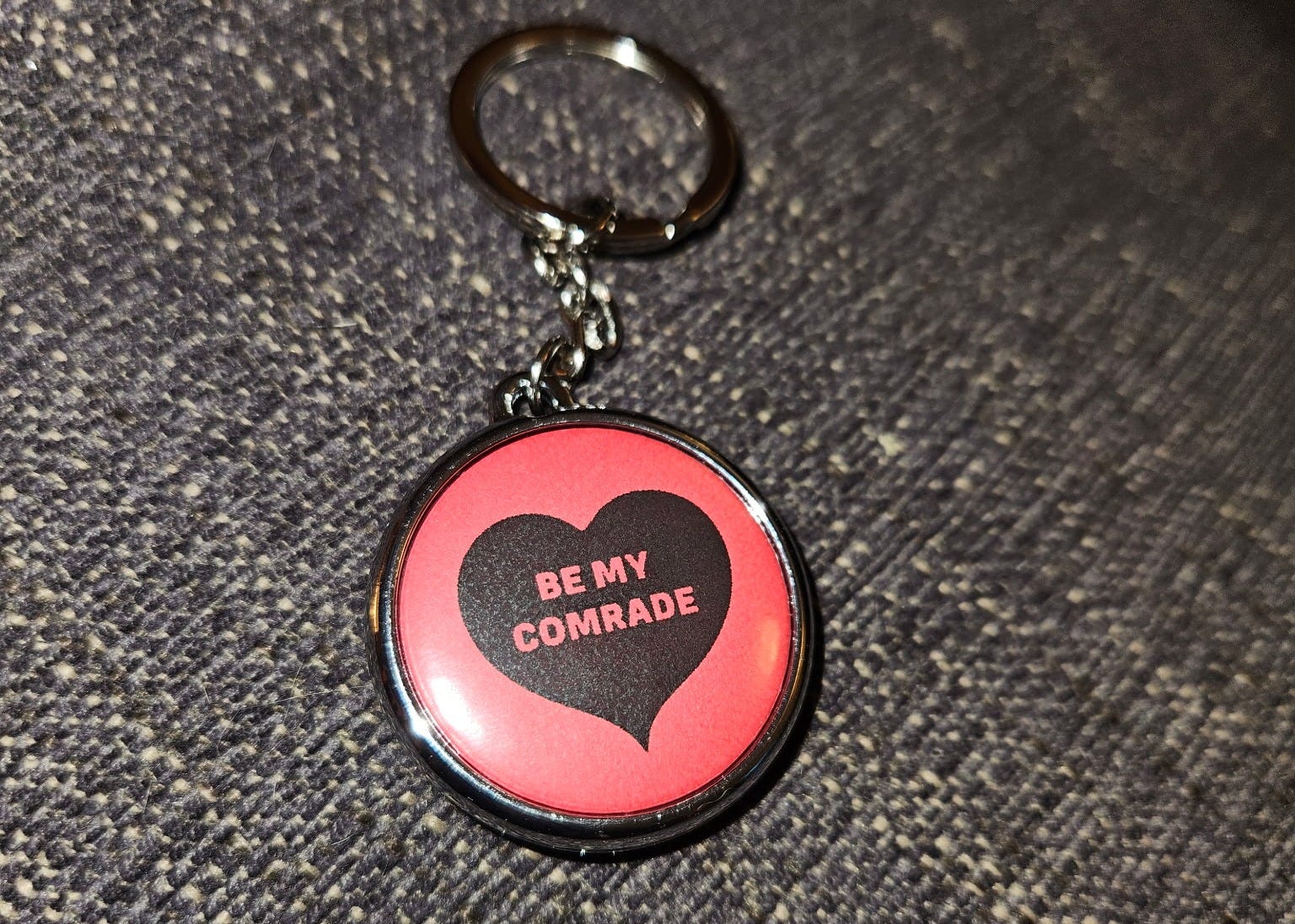
I’ve been thinking about the word “comrade” in particular because, a few weeks ago, a fellow organizer who has, shall we say, a prickly personality, used the word comrade in a group conversation to talk about how someone they knew was treated at a No Kings protest, when they were promptly met with a “What are we doing, cosplaying as Bolsheviks?”.
I get it; I used to feel similarly. The first time I remember hearing someone use the word “comrade” outside of a reference to the Soviet Union was during a presentation a college friend gave on Black labor organizing in New Haven. At the time I giggled because I thought it was goofy, and I thought she was a bit ridiculous.
But as I spent more time in leftist spaces, I began hearing it more and more, and it gave me new references for what a comrade could be, of who it could refer to. And given that in these times it is of the utmost importance that our relationships are strong enough to withstand the violence we are up against, I’ve been thinking about what it means to be a comrade.
Comrade is the word I use to talk about people who I organize with, who I’d feel comfortable vouching for, who I trust to have my back when we’re up against the wall. We might not hang out outside of organizing meetings. I don’t necessarily know what kind of music they like to listen to or if they like to knit or if they’re similarly obsessed with women’s basketball. (My comrades in particular do know that I watch football as I would run late to Sunday meetings when Bills were playing at 1:00. I still made it to the meeting though.)
The first definition of “comrade” in Merriam Webster is “an intimate friend or associate,” and it’s a particular kind of intimacy that I think of when I think of comrade-ship. I think of the closeness borne of struggle and physical proximity between me and the three girls I shared a cell with after we were arrested at the New York Times building at a Writers Against the War on Gaza protest, as we played road trip games to pass the time, even as I found one of them mind-numbingly annoying. A lot of my comrades are annoying. But that’s okay. I don’t need them to be my friends. As I told a friend who recently moved out to the West Coast and was looking to get more involved in neighborhood ICE watch efforts: “you gotta have a high tolerance for leftist nonsense/But the work is good and necessary/Price of the ticket.”
To bring it back around to the historical communism of it all: as I was doing research for this newsletter, I discovered that Chinese iteration of the communist term comrade is tongzhi 同志, which literally translates to “people with the same spirit/goal/ambition.” As my Taiwanese Canadian friend Mikaela, who fact checked this for me, noted, it’s a term that’s hard to use nowadays without the specter of the CCP weighing it down.1 But that literal definition is really what I’m trying to get at when I use the word. My comrades are the people who see the world as it could be and refuse to settle for the way that it is. Those who are willing to take action to see that world come into being.
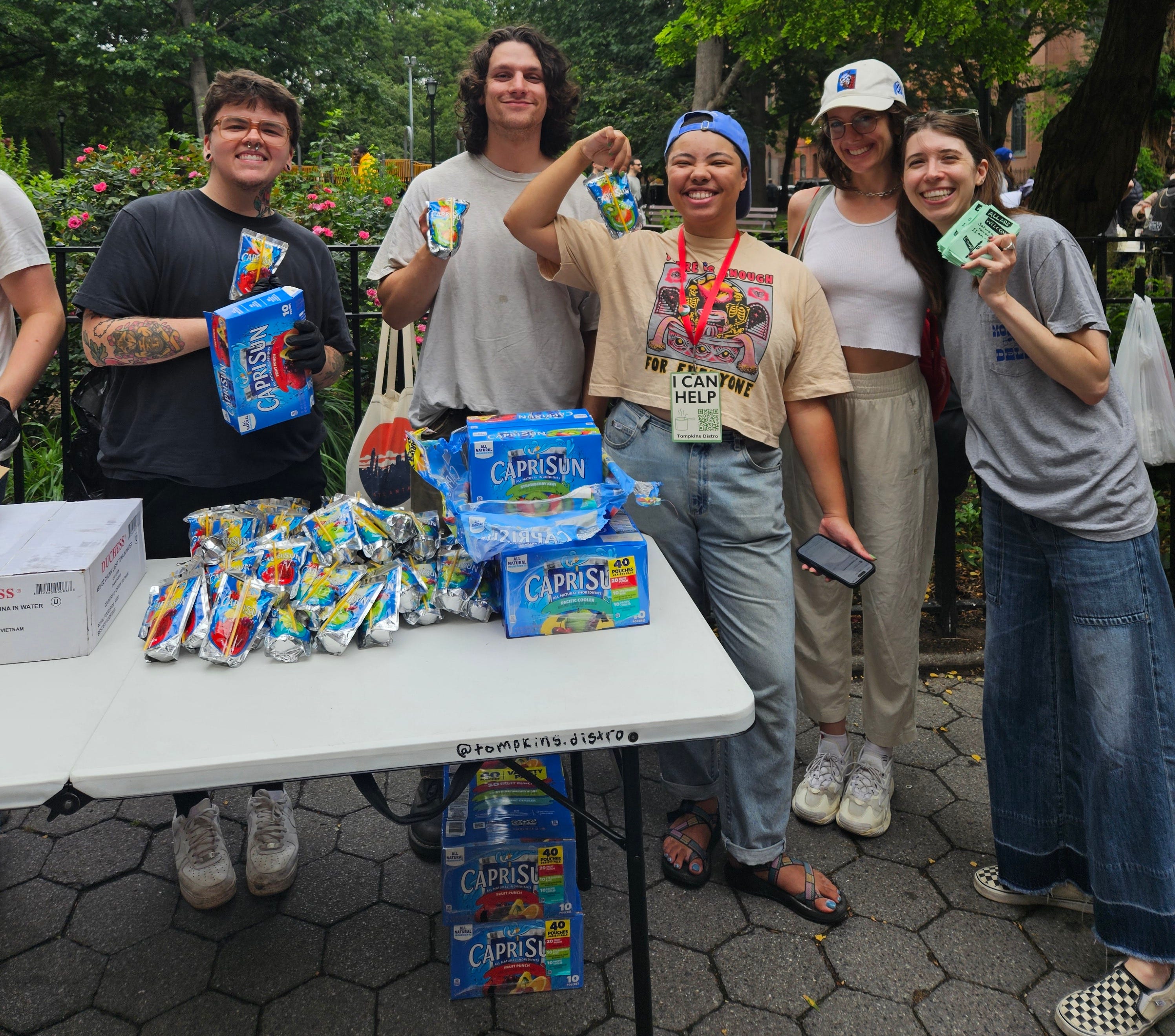
In the two years that I’ve been a part of Tompkins Distro, many of my comrades have become my friends and for that I am beyond grateful. I like goofing off with them in the in-between moments, ranking the movies in the Twilight franchise, helping them source obscure items for their Halloween costumes, dancing the night away at their birthdays. But as I remarked on the first Distro-versary, “Having a good time is not a requirement for being in community,” and the year that has elapsed since then has surely shown me that. In the last year, as the United States has descended further into the clutches of fascism, as the genocide in Gaza rages on, my organizing circles have continued to expand as more people are brought into the fold of anti-fascist resistance. I have more comrades today than I did last year and than I did the year before that, and that is surely a good thing. I will need them by my side in the fights that are to come.
Some housekeeping: I will probably move this newsletter off Substack once I get two brain cells together to do so! First step was writing again, second step is administrative business. But if you’d like to keep these coming to your inbox, there’s nothing you need to change.
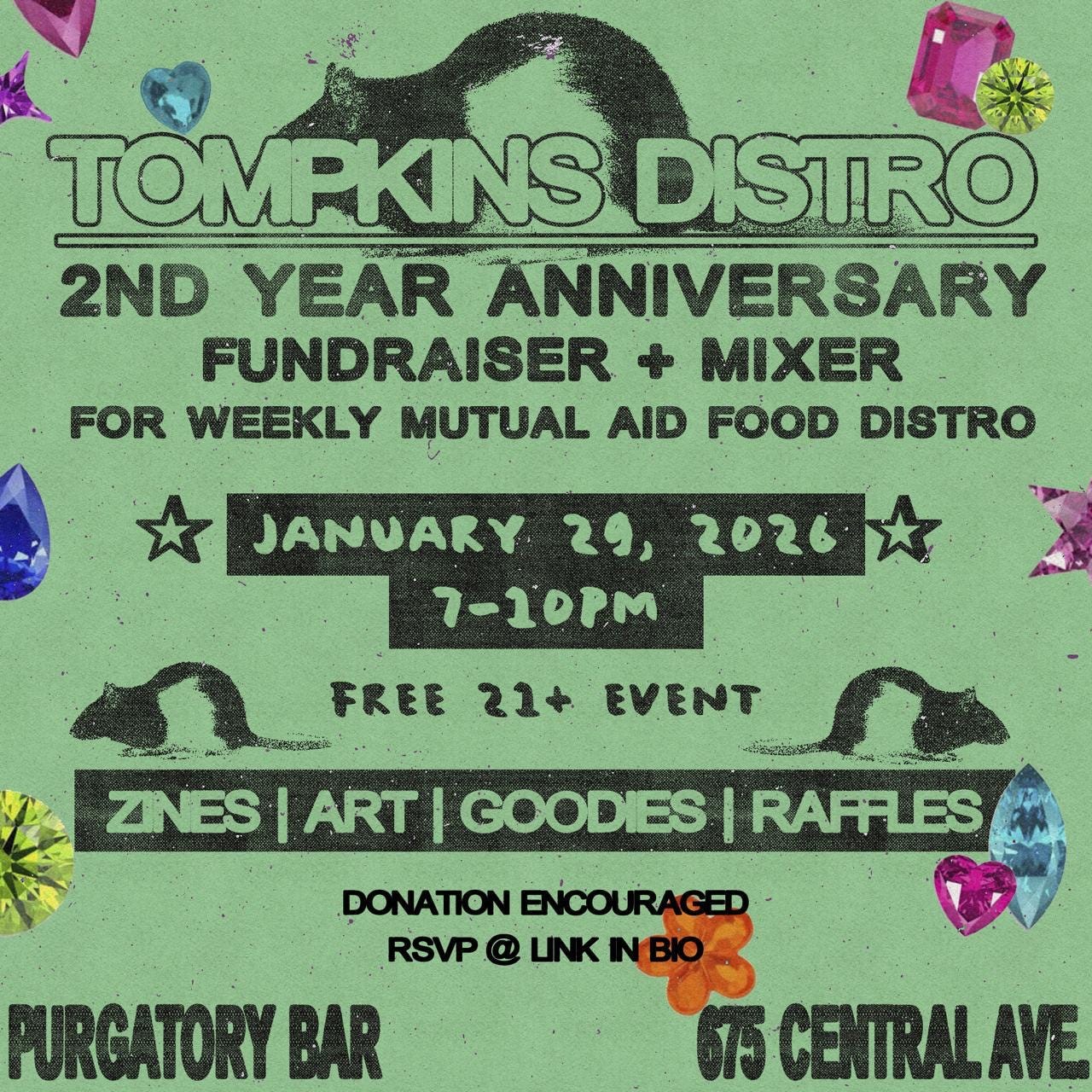
If you’re in New York! Join us at Purgatory Bar on Thursday 1/29 from 7-10 to celebrate 2 Years of Tompkins Distro!
Currently reading: Woodworking by Emily St. James
Spinning: “I’ll Believe in Anything” by Wolf Parade
Mikaela also shared with me that since the 1990s, the term has been reclaimed by the queer community in China and across the diaspora to refer to one’s fellow queers. Language! Its evolution! So fascinating.